Clinical cognitive assessments are built to measure, not to entertain. But for cognitive therapy, engagement is part of the product: the science team needed around 20 minutes of sustained engagement, and the existing assessment flows held attention for 3–4.
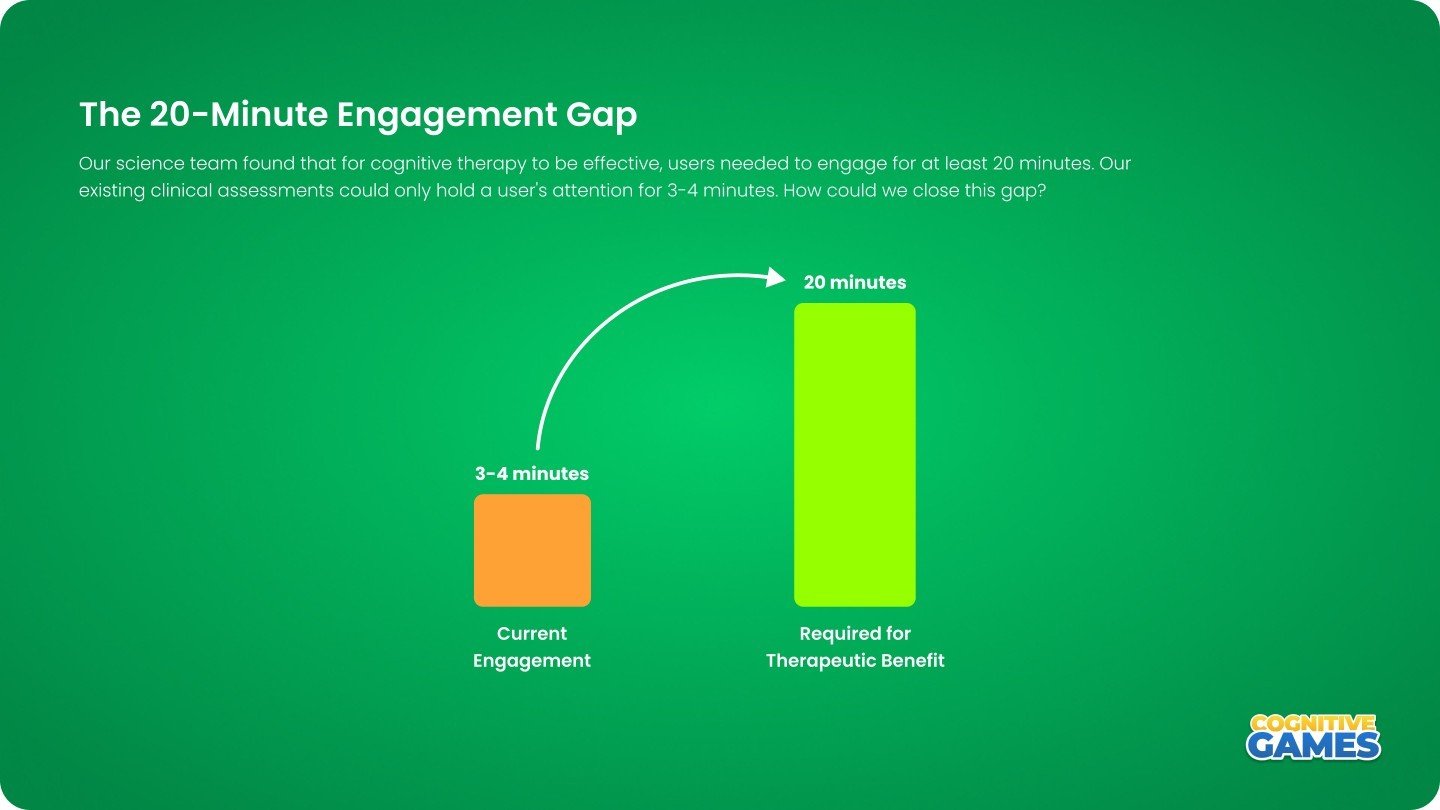
I helped transform four scientific tasks into a suite of mobile-first games for people with Mild Cognitive Impairment, preserving the approved assessment logic while adding story, scoring, feedback, and interaction patterns that give people a reason to continue.
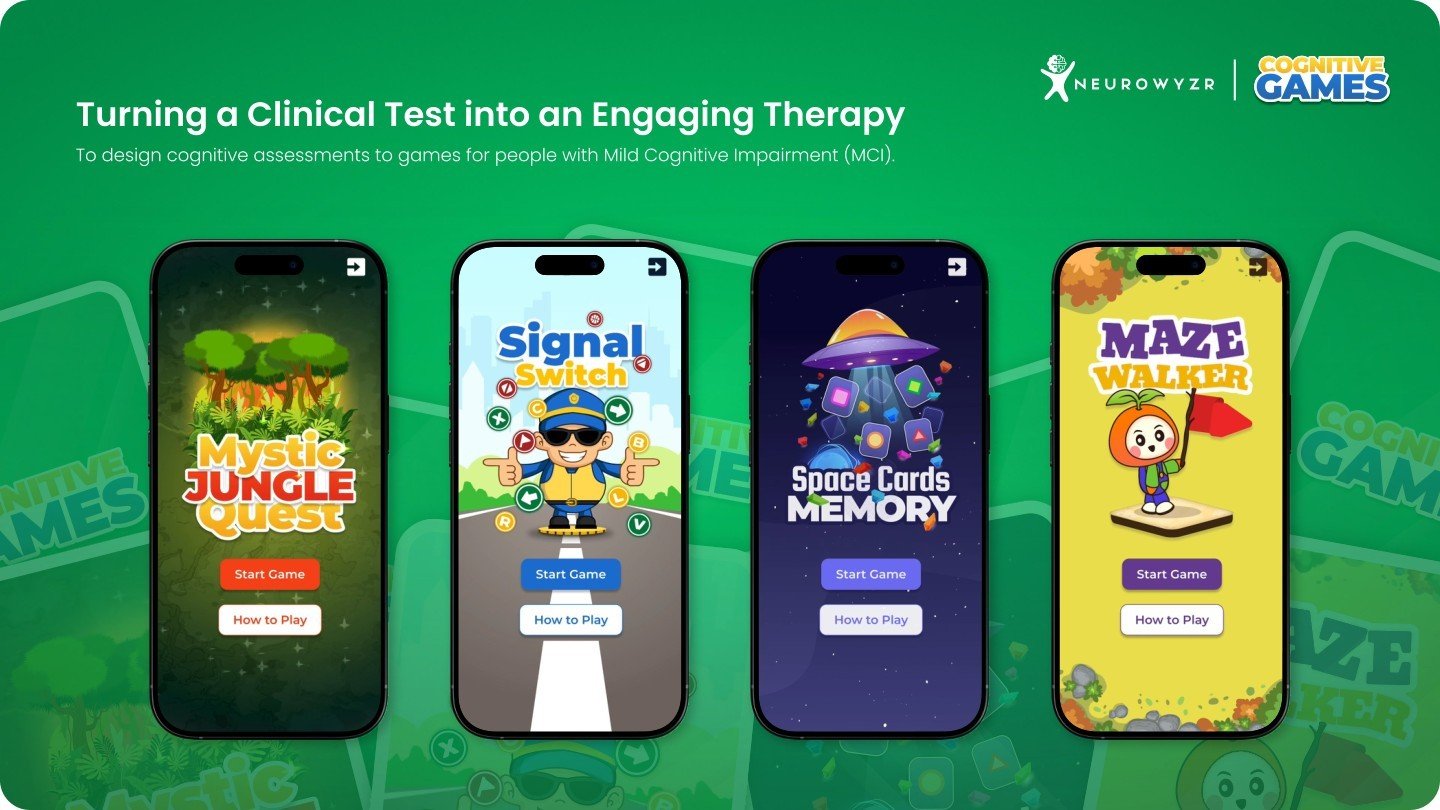
The 20-minute engagement gap
3–4 min
attention held by the original assessment flows
20 min
engagement required for therapeutic benefit
4 games
designed and prototyped to close the gap
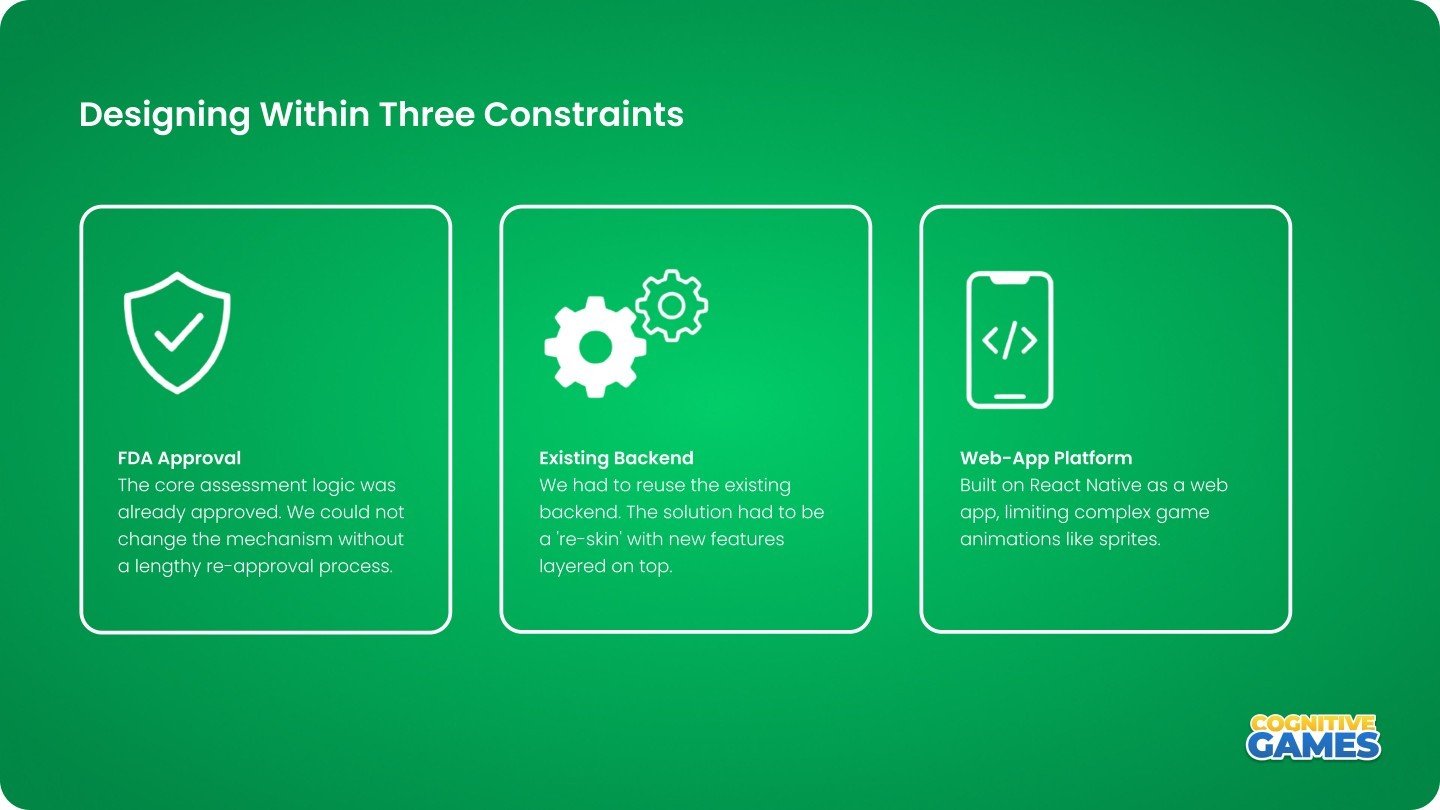
Three constraints shaped every decision
- Approved mechanisms: the core task logic was already clinically approved and couldn’t be casually altered
- Existing backend: new experience features had to layer on top of what was built
- React Native web app: the platform limited complex animation and sprite-based game behavior
My role was to turn those constraints into a design strategy, not a list of compromises.
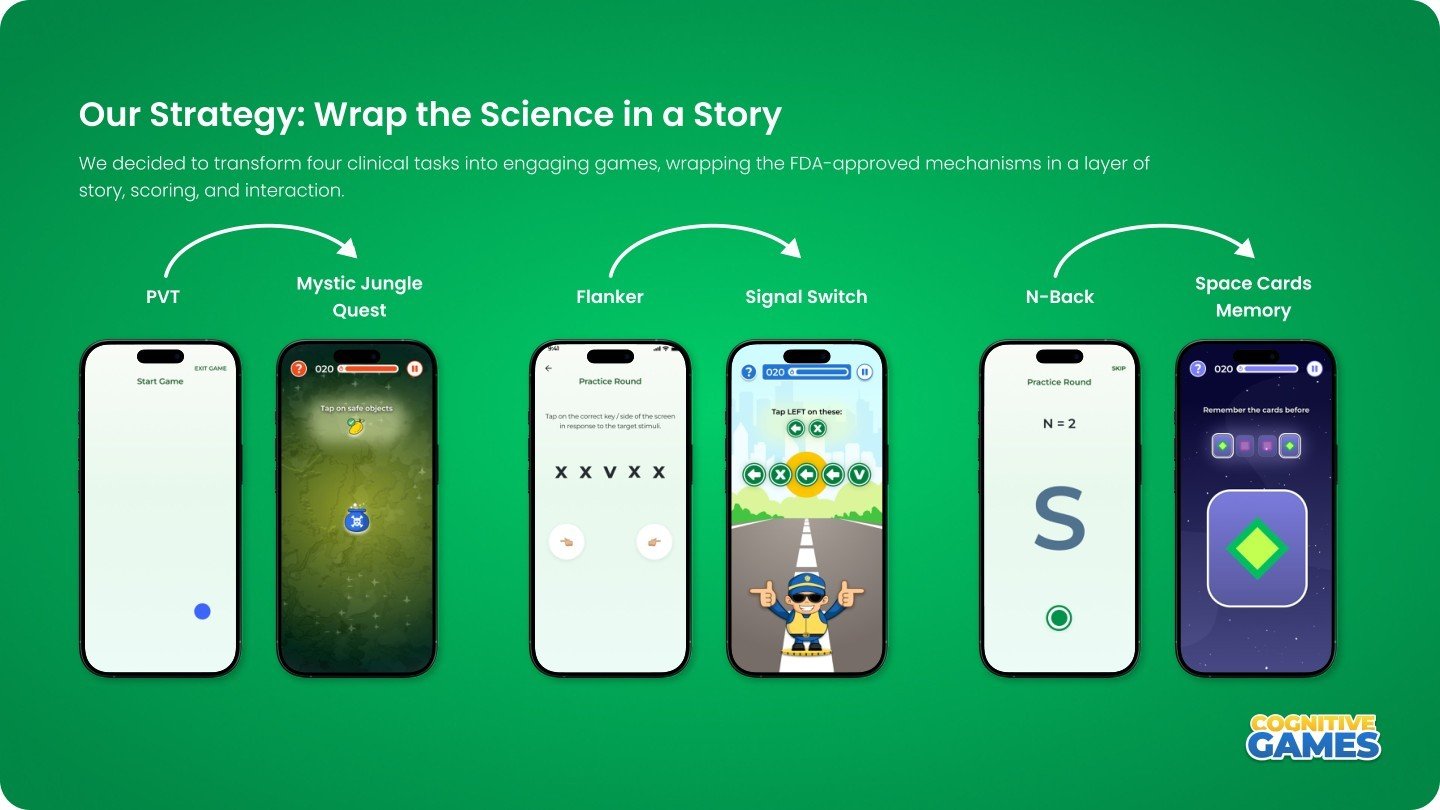
Strategy: wrap the science in a story
Keep the scientific task intact; redesign everything around it. Each clinical task became a game concept with its own metaphor:
| Clinical task | Game wrapper | Design move |
|---|---|---|
| PVT | Mystic Jungle Quest | Abstract stimulus-response becomes collecting treasures, avoiding traps |
| Flanker | Signal Switch | Directional attention becomes a character-led interaction system |
| N-Back | Space Cards Memory | Complex working memory simplified through card matching and sliding turns |
| Maze | Maze Walker | Validated mechanic refreshed with level differentiation and a character world |
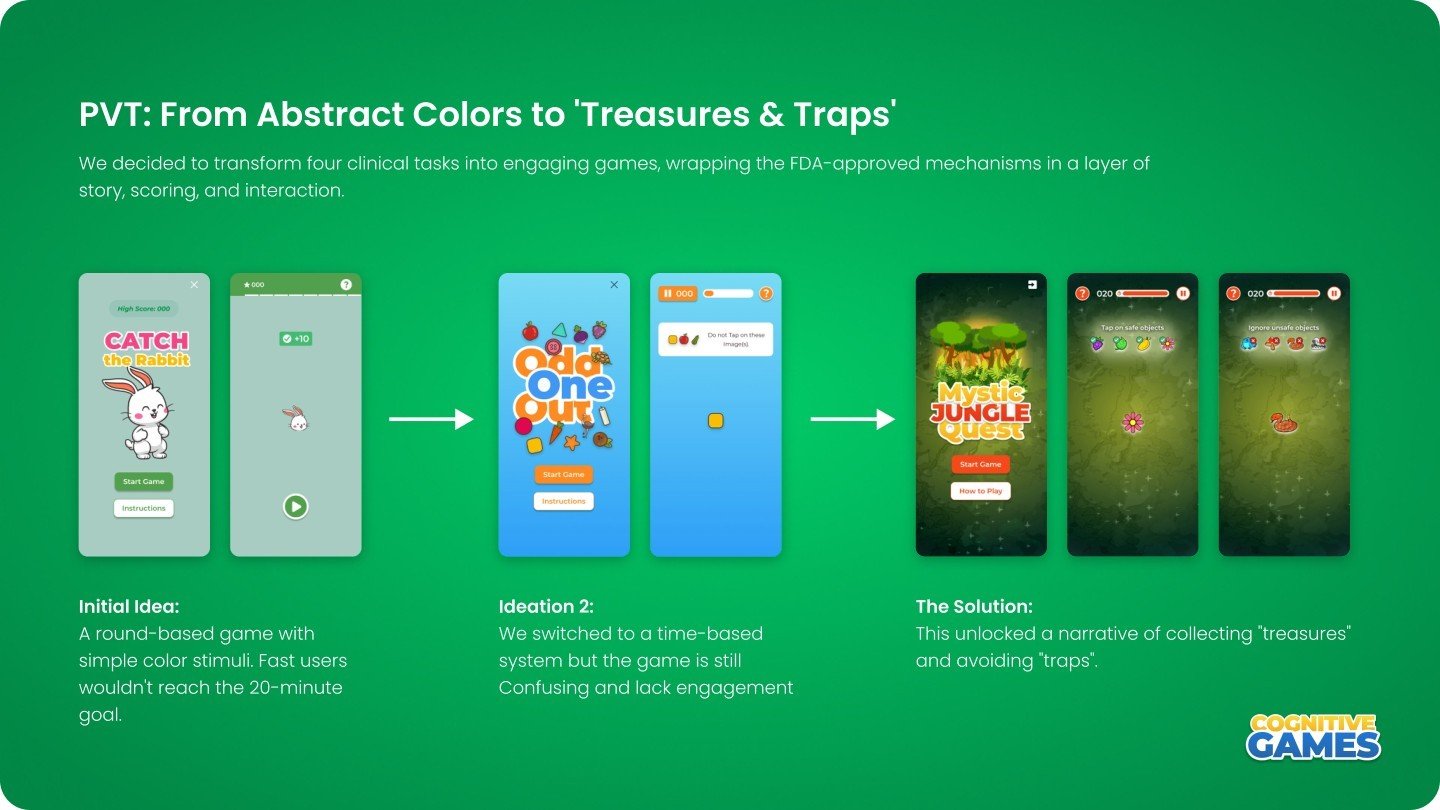
From abstract colors to treasures and traps
The first PVT approach used simple color stimuli and rounds: too thin, and fast users finished too quickly to hit the therapy target. The breakthrough was a collection/avoidance loop: users weren’t responding to abstract colors anymore, they were collecting treasure and dodging traps in a jungle world. Same response logic, real motivation.
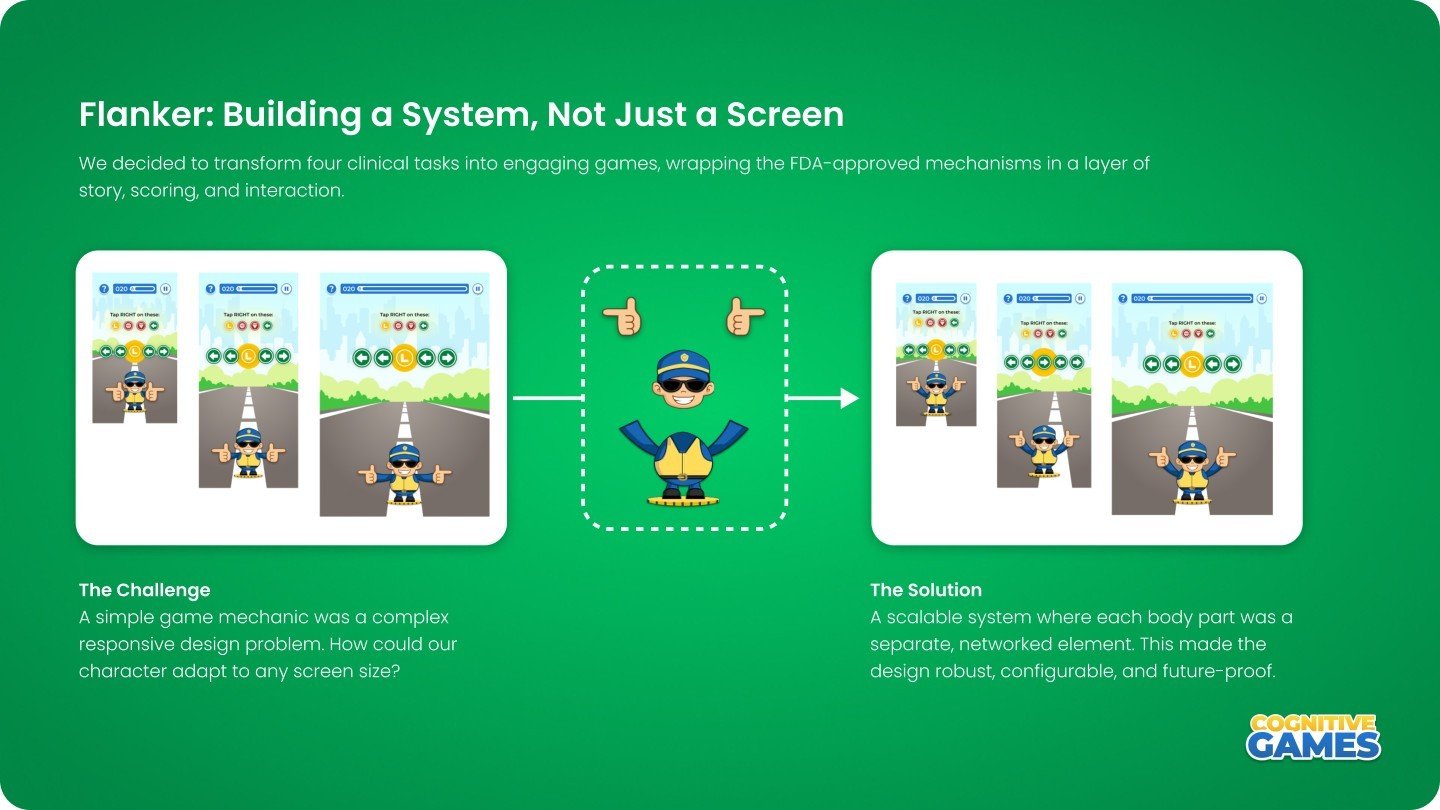
Build a system, not just a screen
The Flanker character had to respond across screen sizes without a game engine. A one-off illustration would break; a system would scale. I constructed the character from configurable parts (each body element separate and composable) so the design stayed robust across layouts and stayed buildable for the web-app platform.
The breakthrough came from watching, not designing
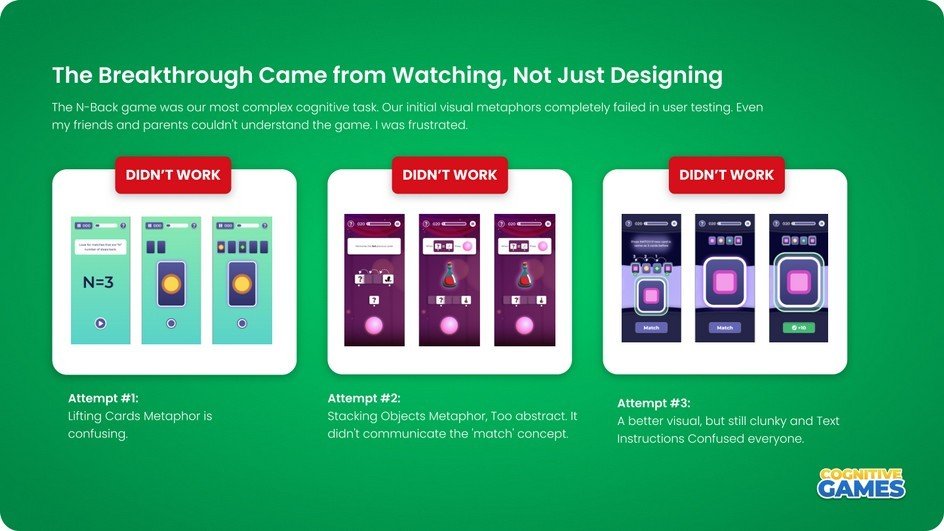
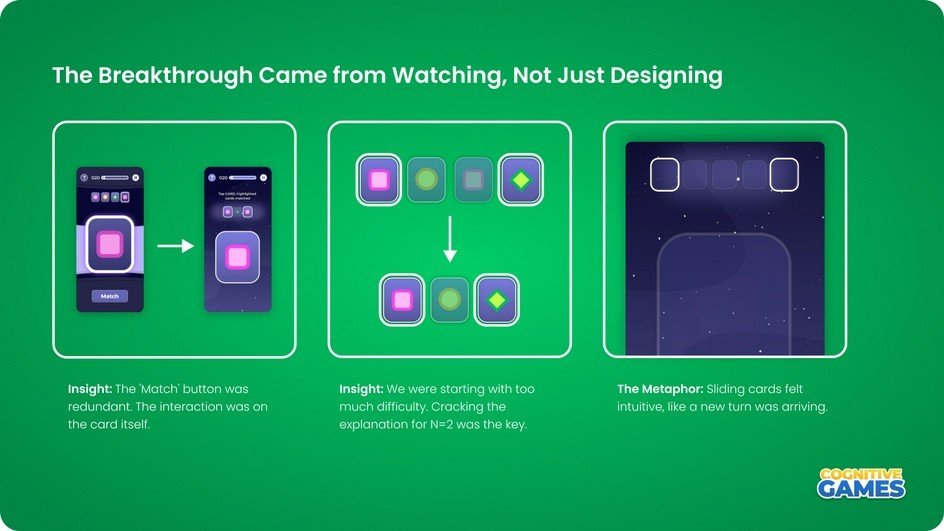
N-Back was the hardest task to communicate. Multiple metaphors failed: lifting cards, stacking objects, prettier visuals that still leaned on text instructions. Observation broke it open: the separate “Match” button was redundant (the card itself was the natural target), and explanations collapsed above N=2. Sliding cards made the metaphor click: a new turn arrives, you compare it with memory, and the action lives on the object itself.
Failed assumption
Observed insight
A better visual would solve comprehension
The interaction model itself was unclear
Text instructions could carry the task
The metaphor and affordance had to do the teaching
Users could start at higher complexity
N=2 had to be understandable first
Maze Walker: respect what’s validated
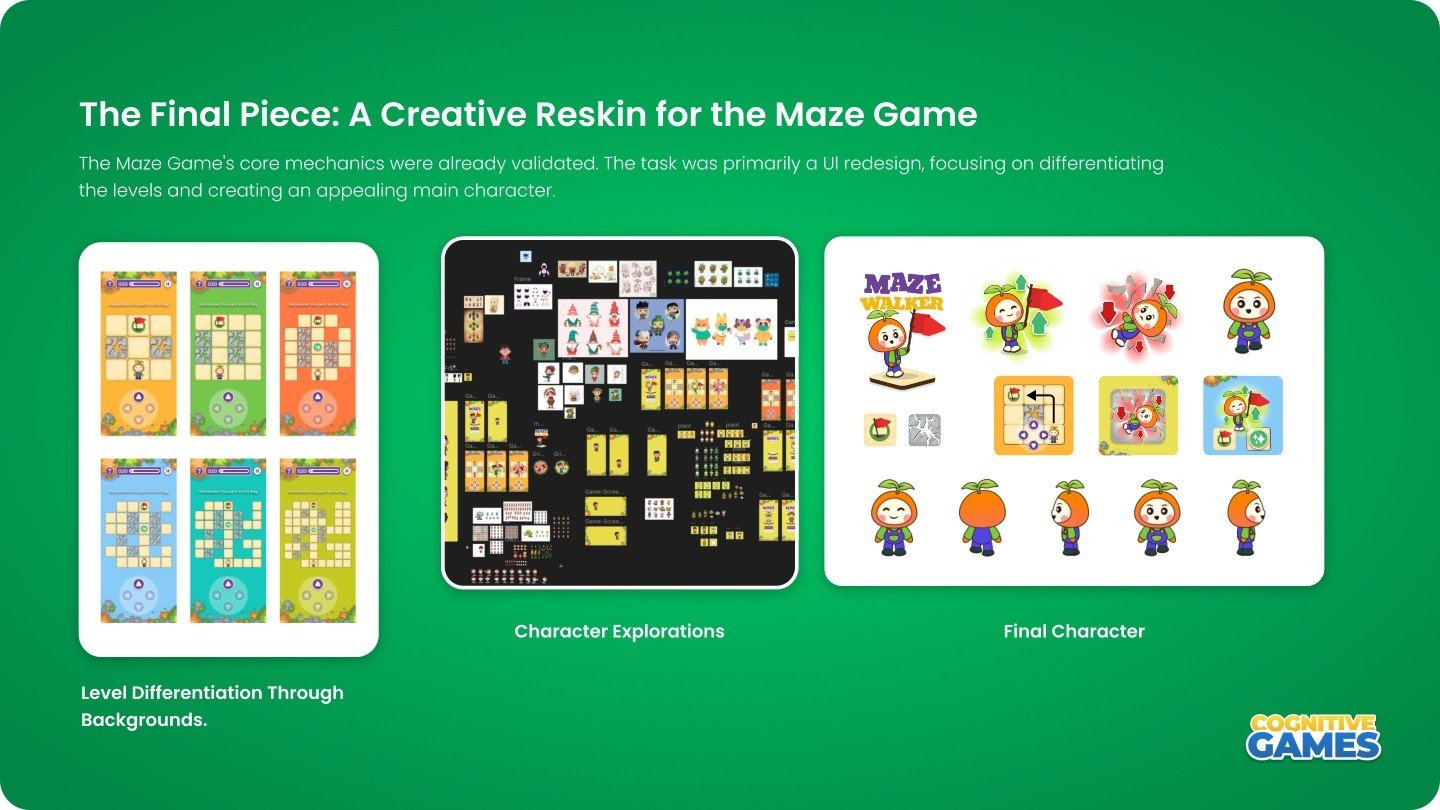
Not every game needed reinvention. The Maze mechanics were already validated; the design task was differentiation and appeal: clearer levels, a friendlier character world, and a UI refresh that helps users orient without touching the validated core.
Testing with two extremes
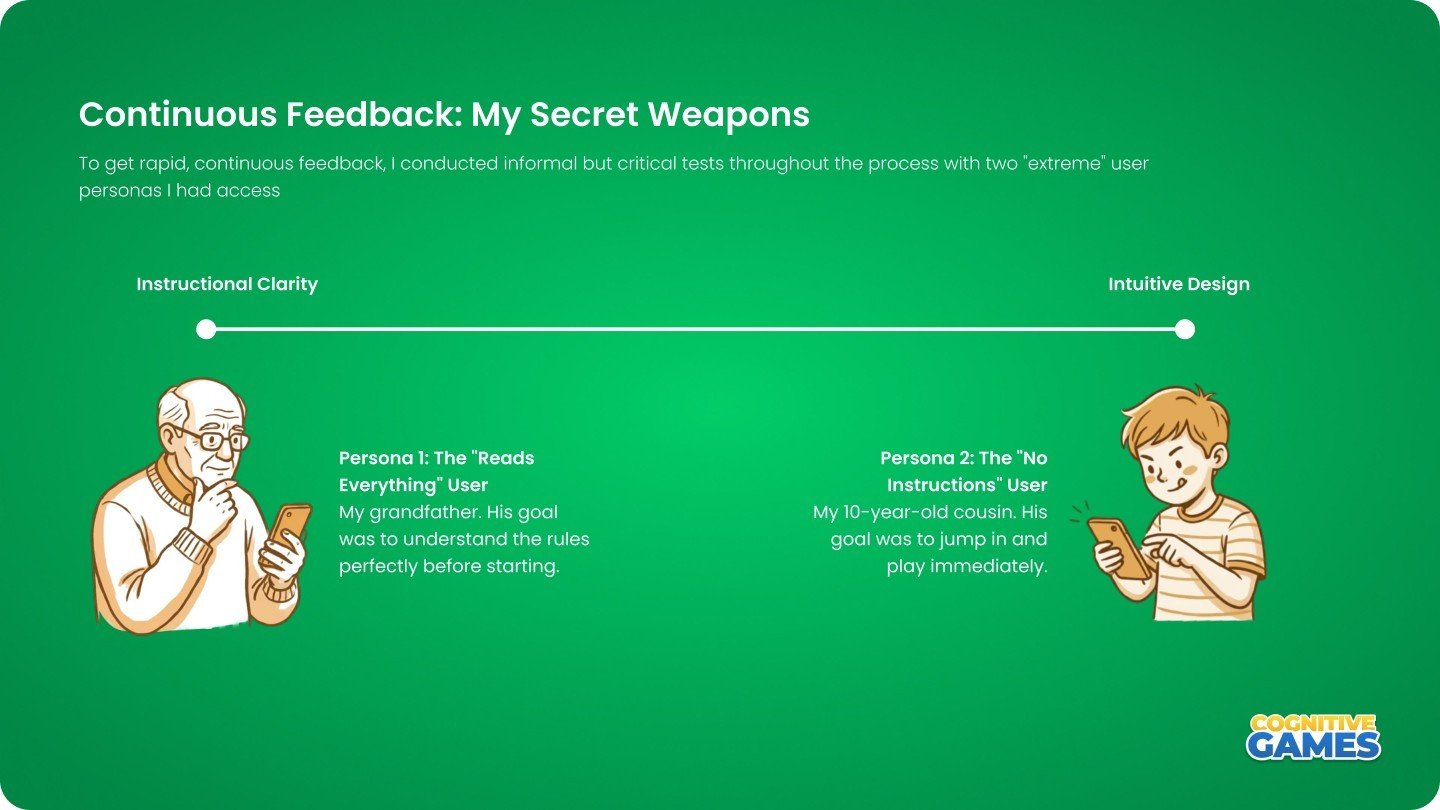
Rapid informal testing stress-tested clarity against two extreme behaviors: one user who read every instruction before starting, and one who skipped straight to playing. If the game could explain itself to both, it could survive the real world.
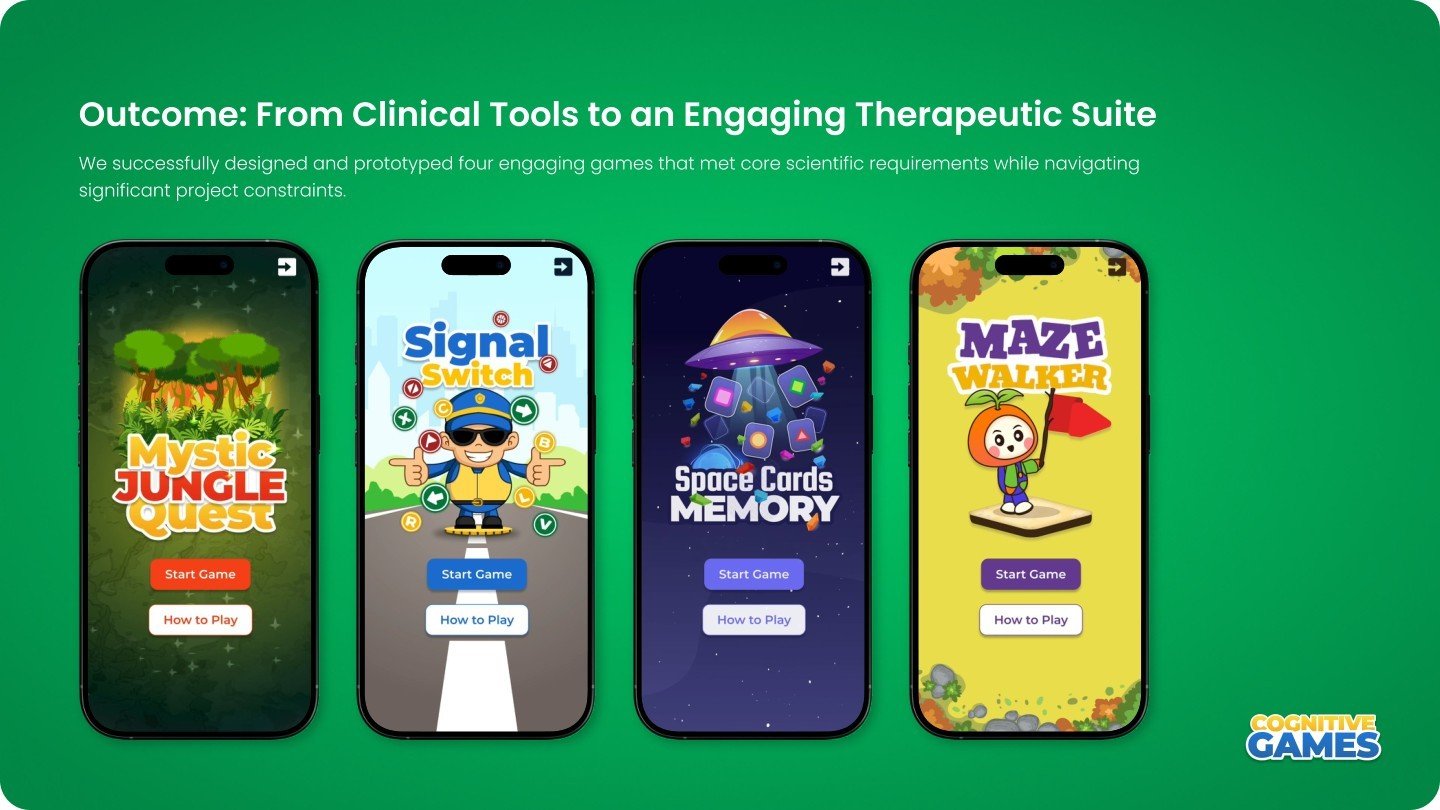
Outcome
Four prototyped games that preserved the scientific requirements while creating a genuinely more engaging experience layer, aligning science, product, and engineering constraints in one coherent suite.
What I’d do differently
More research documentation, earlier low-fidelity prototypes. Both are now standard parts of my process: process over pixels.