
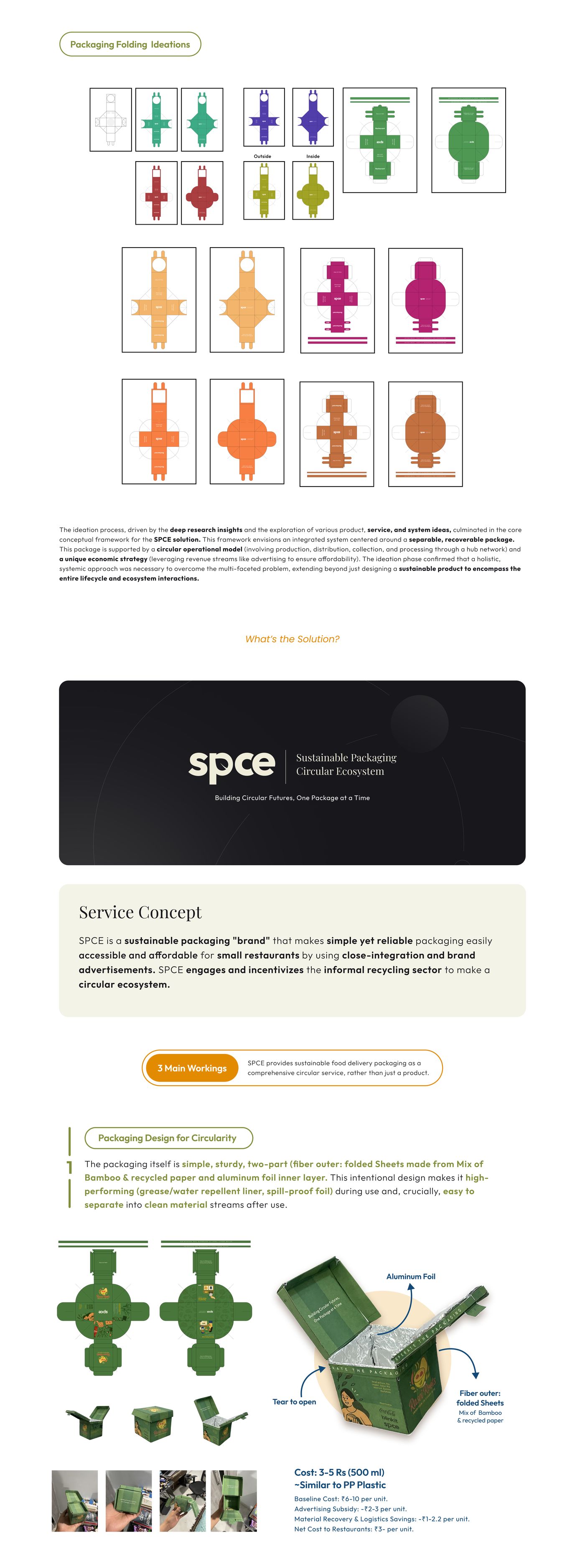
India’s small food businesses run on delivery and takeaway, and on a growing mountain of plastic packaging that’s used once and thrown away. SPCE reimagines that packaging not as waste, but as one loop in a circular ecosystem: reliable, affordable packaging made from bamboo, recycled paper, and aluminium foil, kept in circulation through reuse, recovery, and composting, supported by local micro-factories and the informal recycling sector.
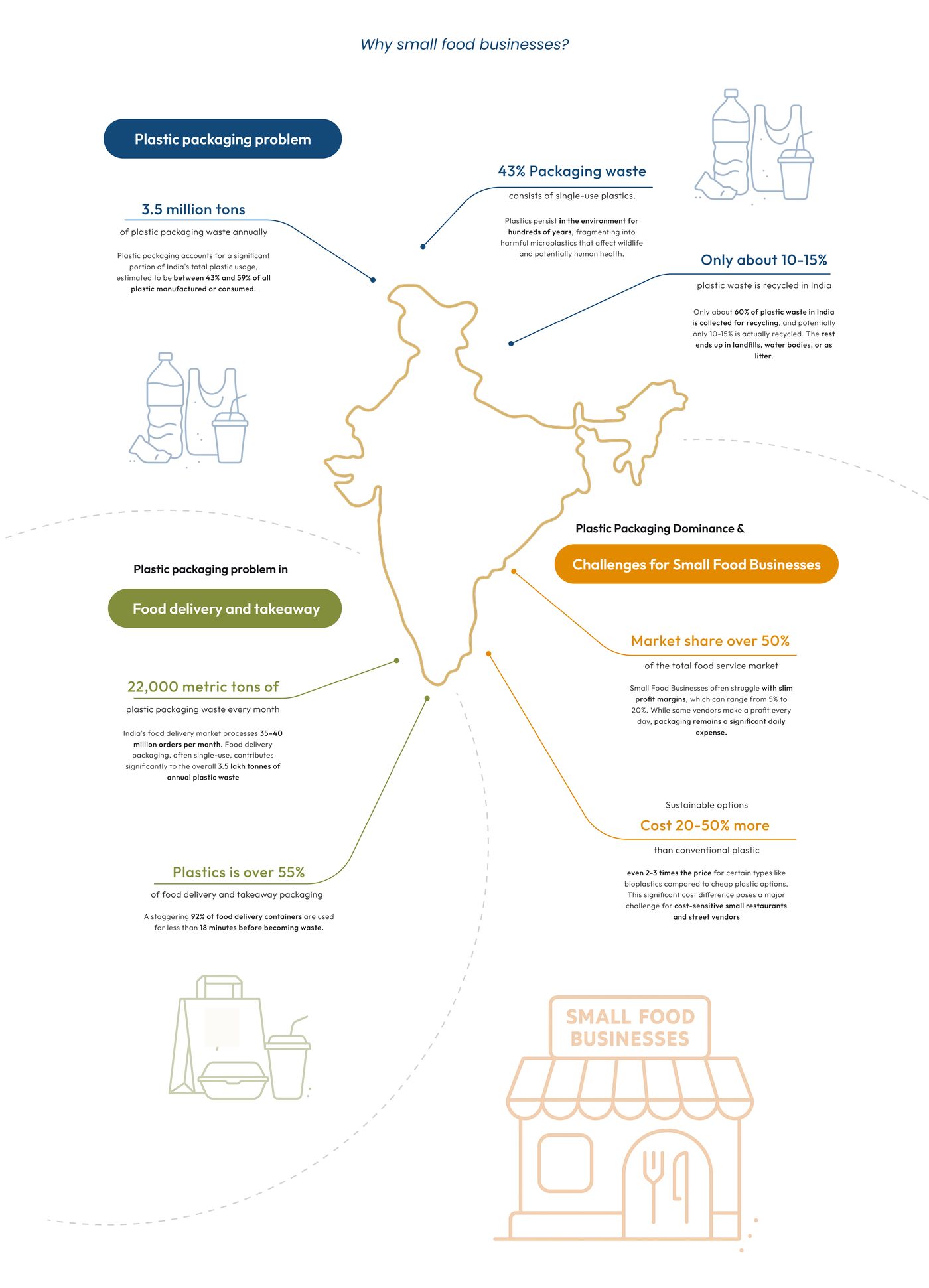
3.5M tons
of plastic packaging waste generated in India each year
~10–15%
of it actually recycled today
20–50%
packaging cost premium small food businesses absorb
The problem: packaging built to be thrown away
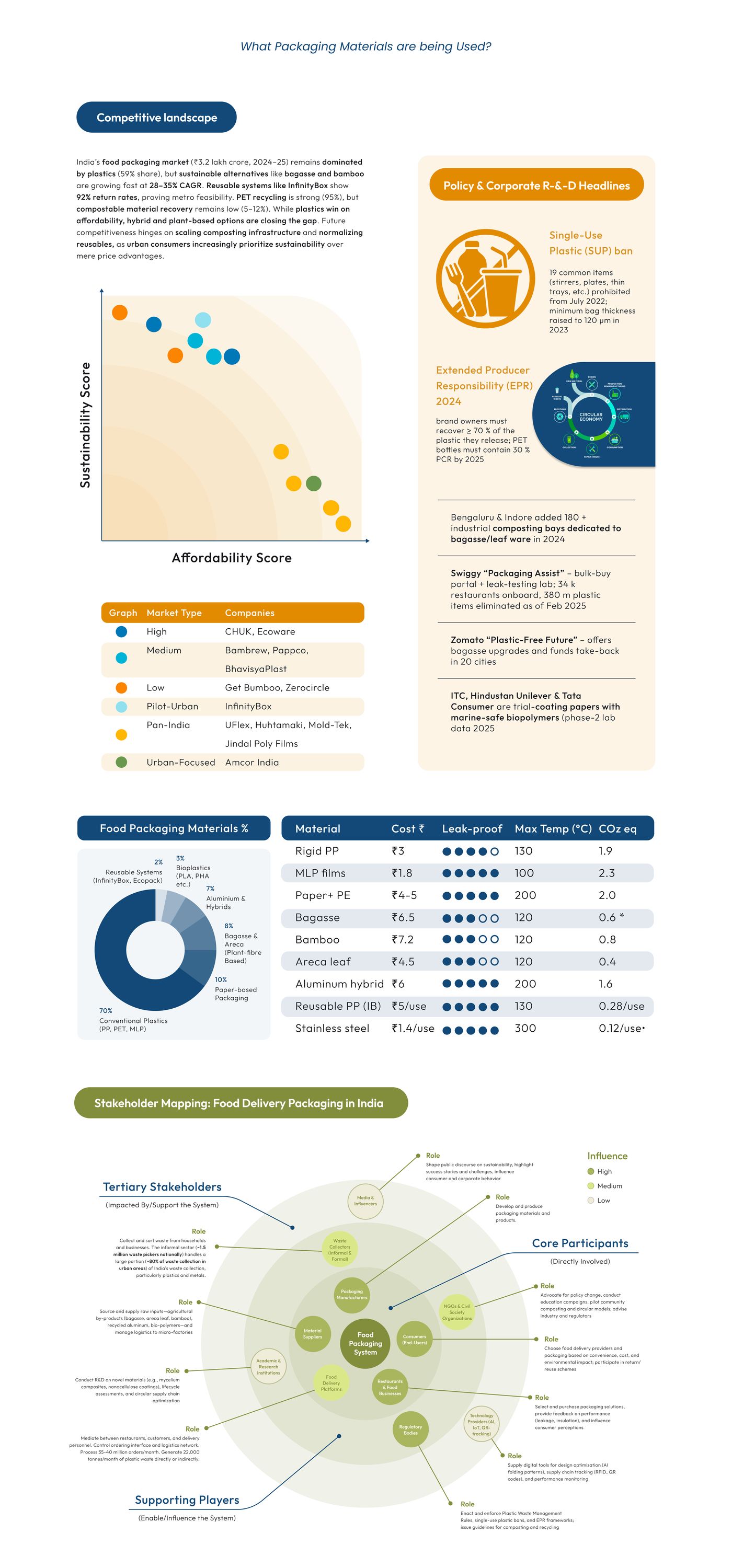
Food delivery and takeaway have crossed 50% market share, and packaging waste scales right along with it. For small businesses the packaging is expensive, mostly plastic, and has no life after the meal. I mapped where the waste concentrates and why the current model keeps producing it.
Research: talking to the whole loop
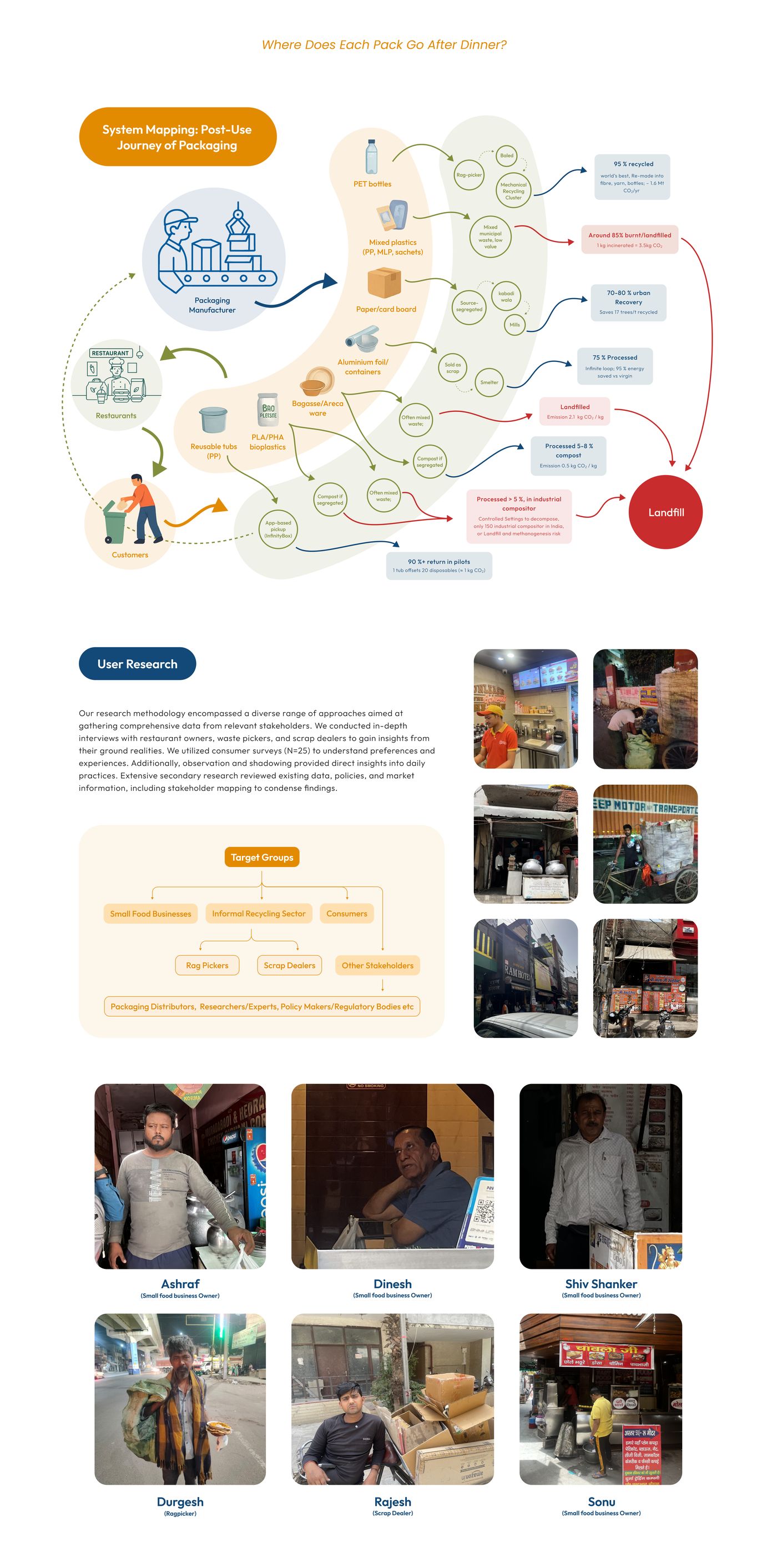
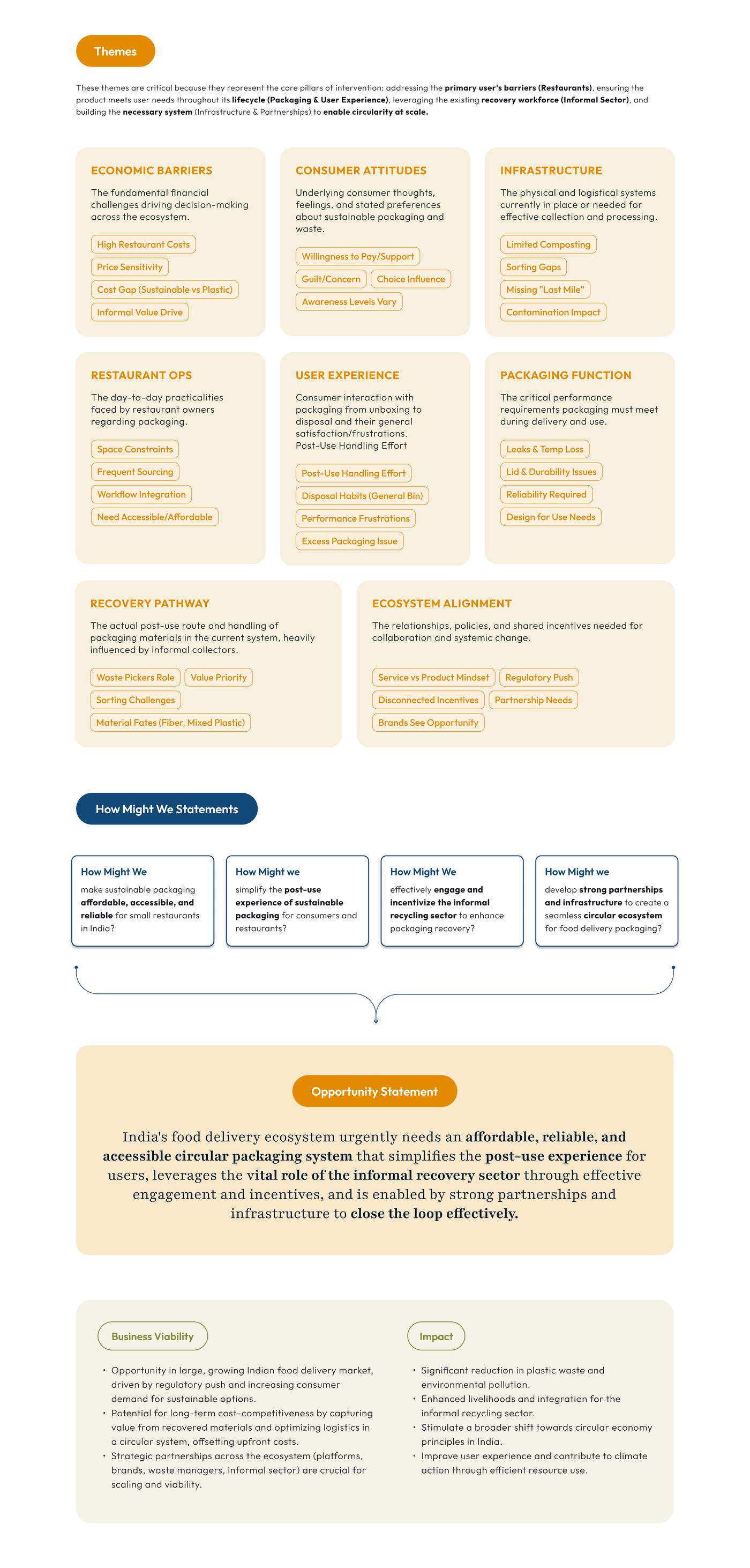
Packaging isn’t one user’s problem; it touches the restaurant owner, the delivery rider, the customer, and the informal recycler. I researched across that chain to understand motivations, costs, and where a circular model could realistically hook in.
Designing the material and the loop
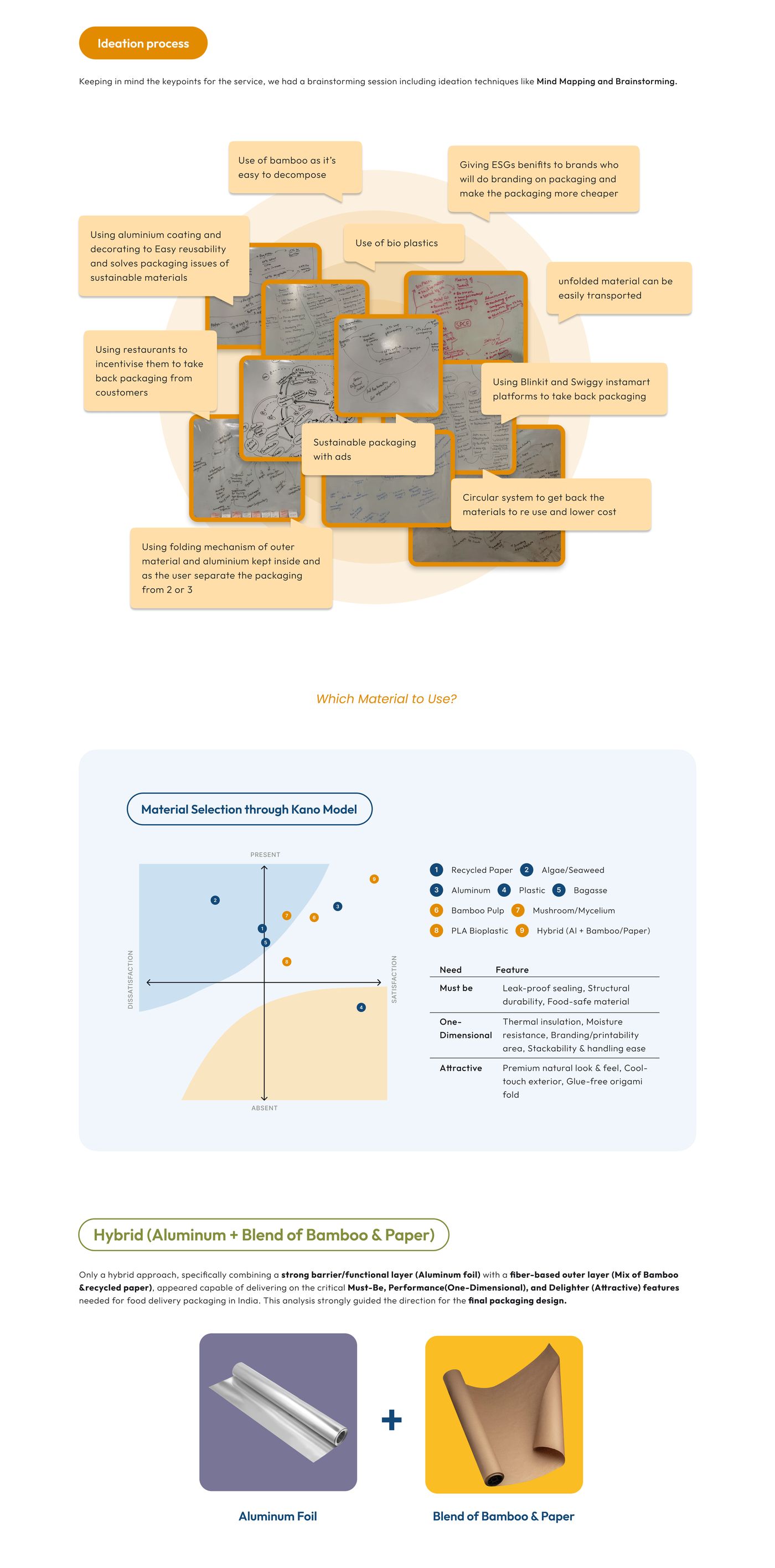
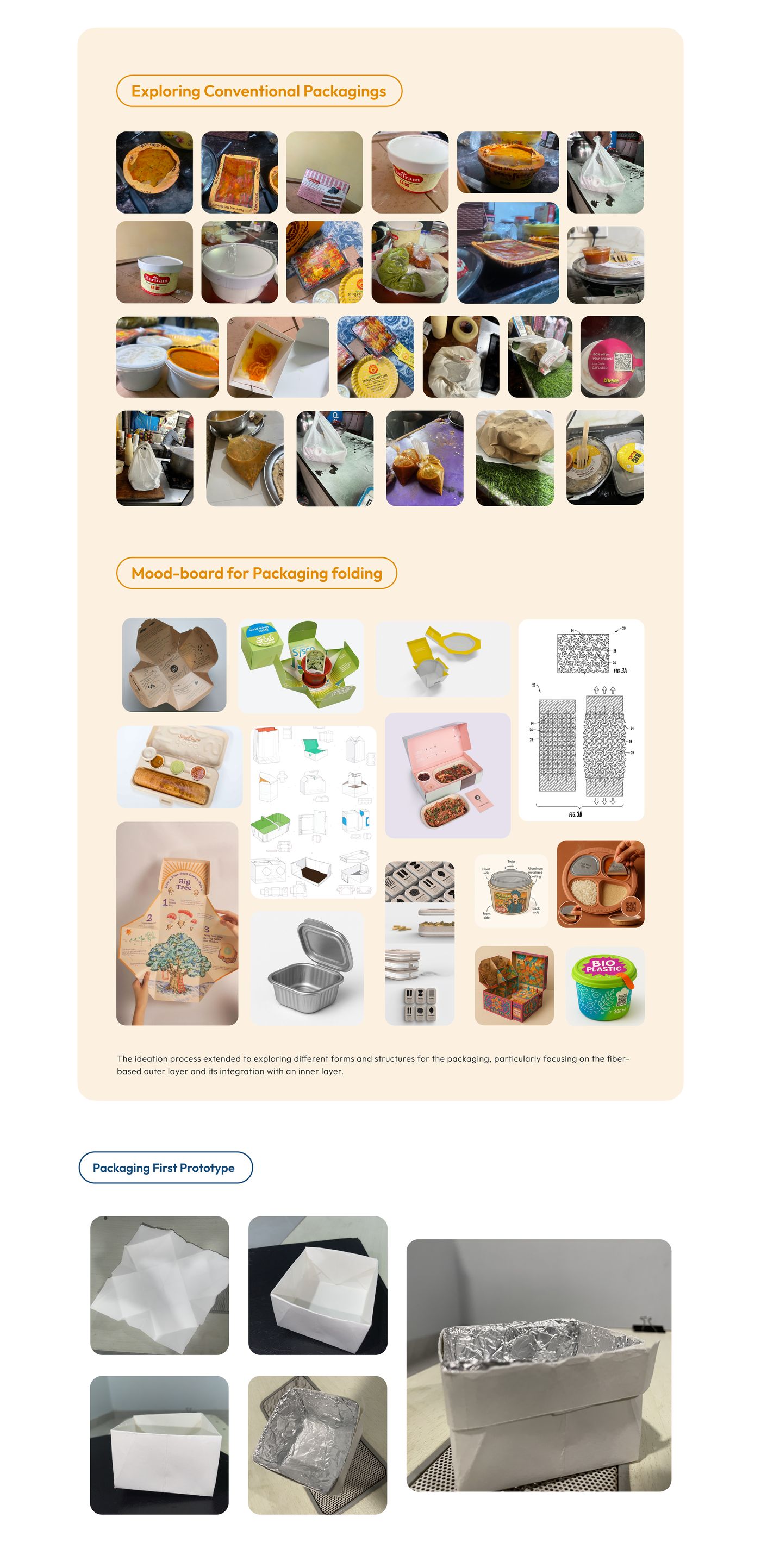
The core product decision: a hybrid of bamboo and recycled paper with an aluminium-foil layer, strong enough to be reliable, cheap enough to be adopted, and recoverable enough to stay in circulation. I prototyped forms and tested them against real conventional packaging.
Making it a system, not just a product
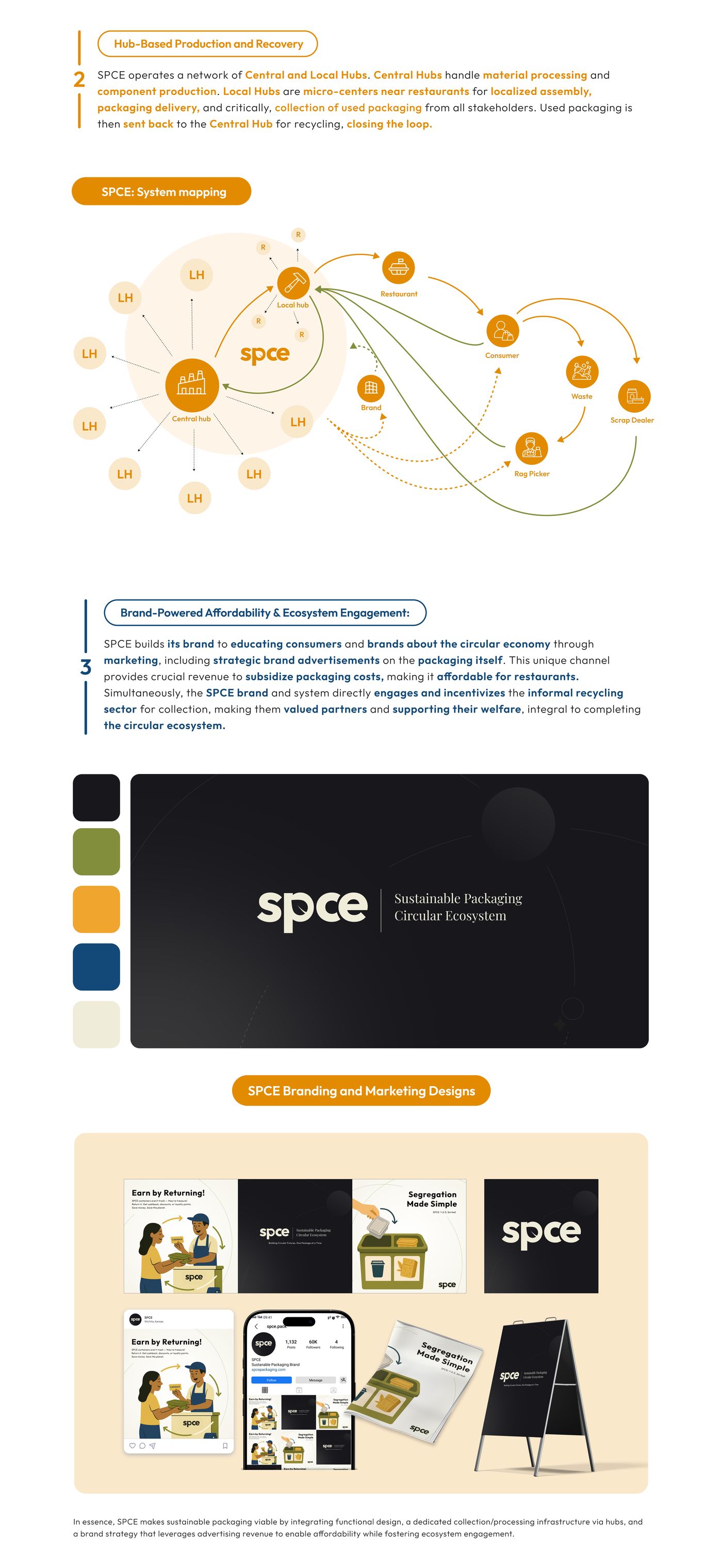
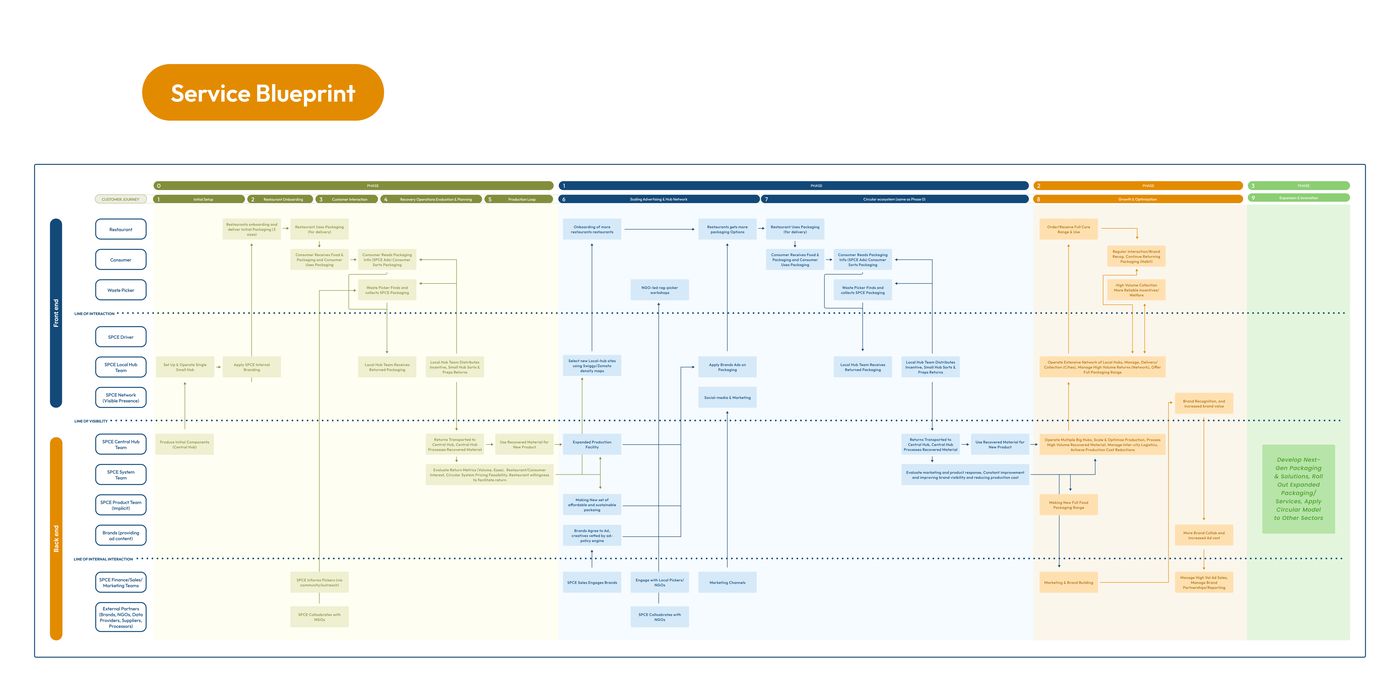
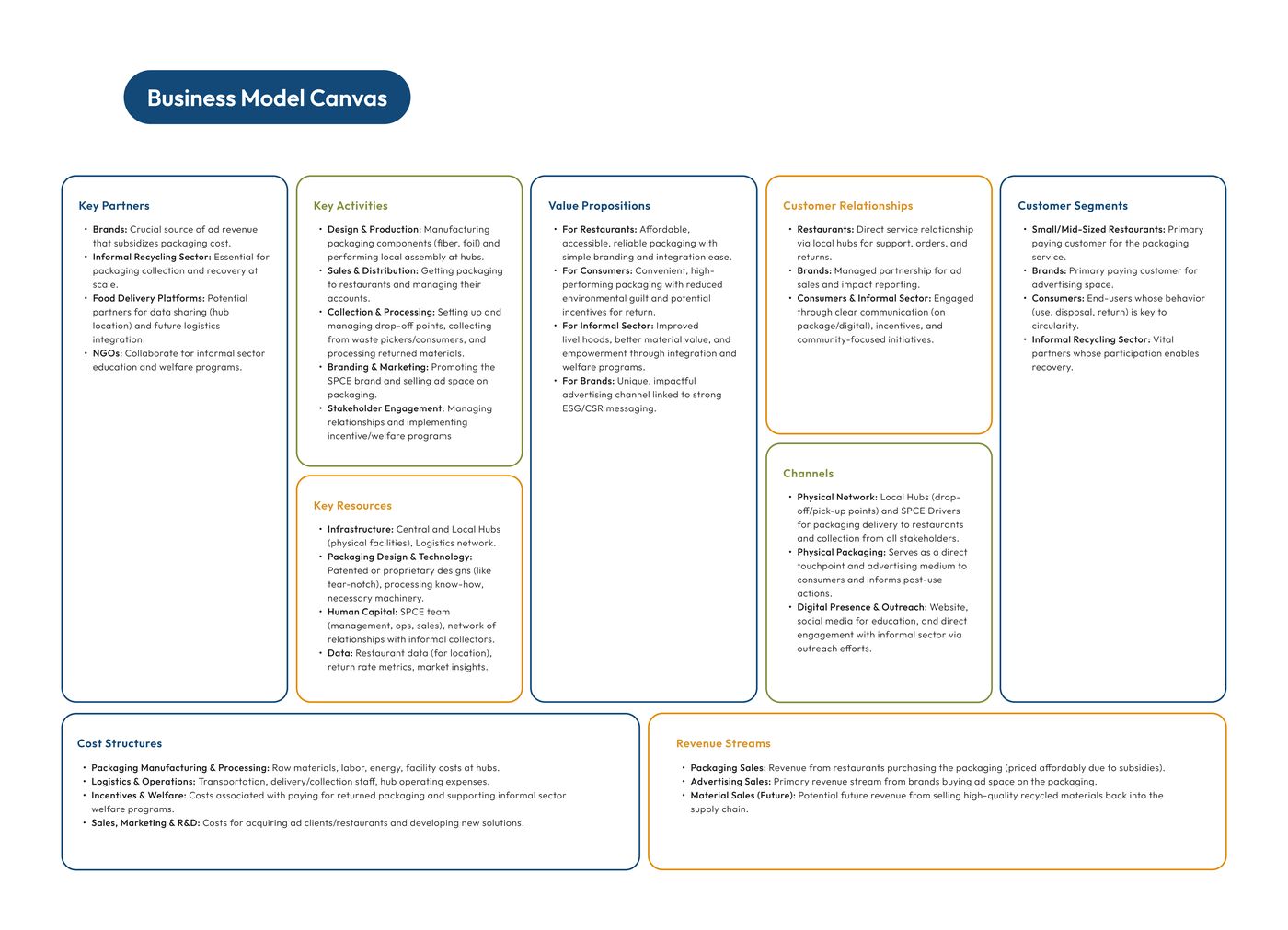
A circular material only works if the service around it does. I designed the brand, the hub / micro-factory network that keeps packaging moving, and the full service blueprint and business model that make it viable for small businesses.
Why it matters
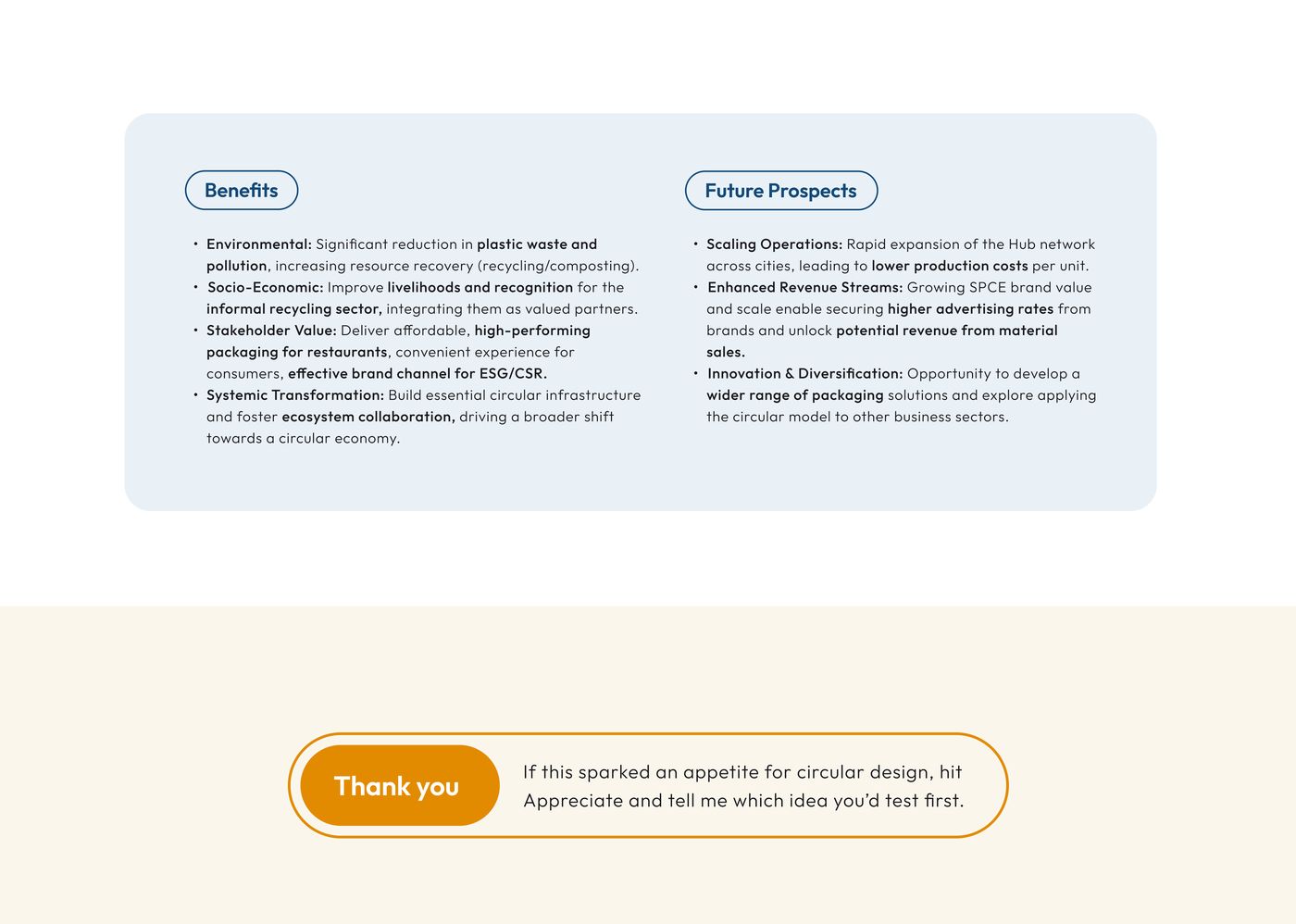
SPCE is service design at full stretch: a material decision, a brand, a service blueprint, a business model, and a role for the informal recycling sector, all in service of turning single-use packaging into something that comes back.