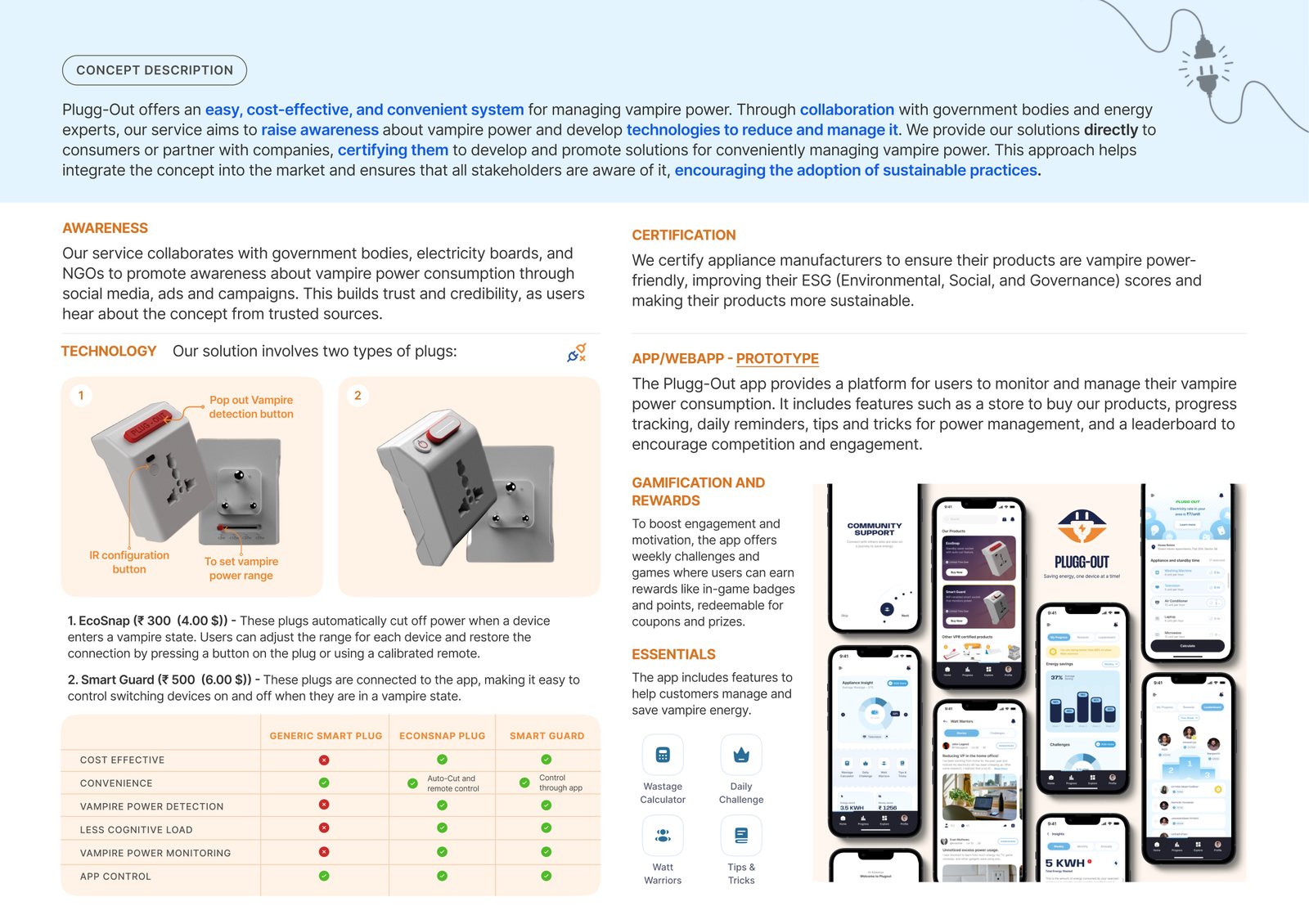
Most households pay for electricity they never use. Standby “vampire power” quietly drains energy from idle appliances: invisible, unglamorous, and surprisingly expensive at scale. Plugg-out is a service that makes that invisible loss visible, then uses feedback loops and behavior-changing interactions to help people actually act on it.
We built it over five months for the Student Service Design Challenge, competing against 150 international teams. It reached the 8 global finalists and won first place.
1st
of 150 international teams, IKEA Service Design Challenge 2024
Top 8
global finalists before the winning pitch
5 mo
from problem framing to tested service concept
01. Nobody owns a cost they cannot see
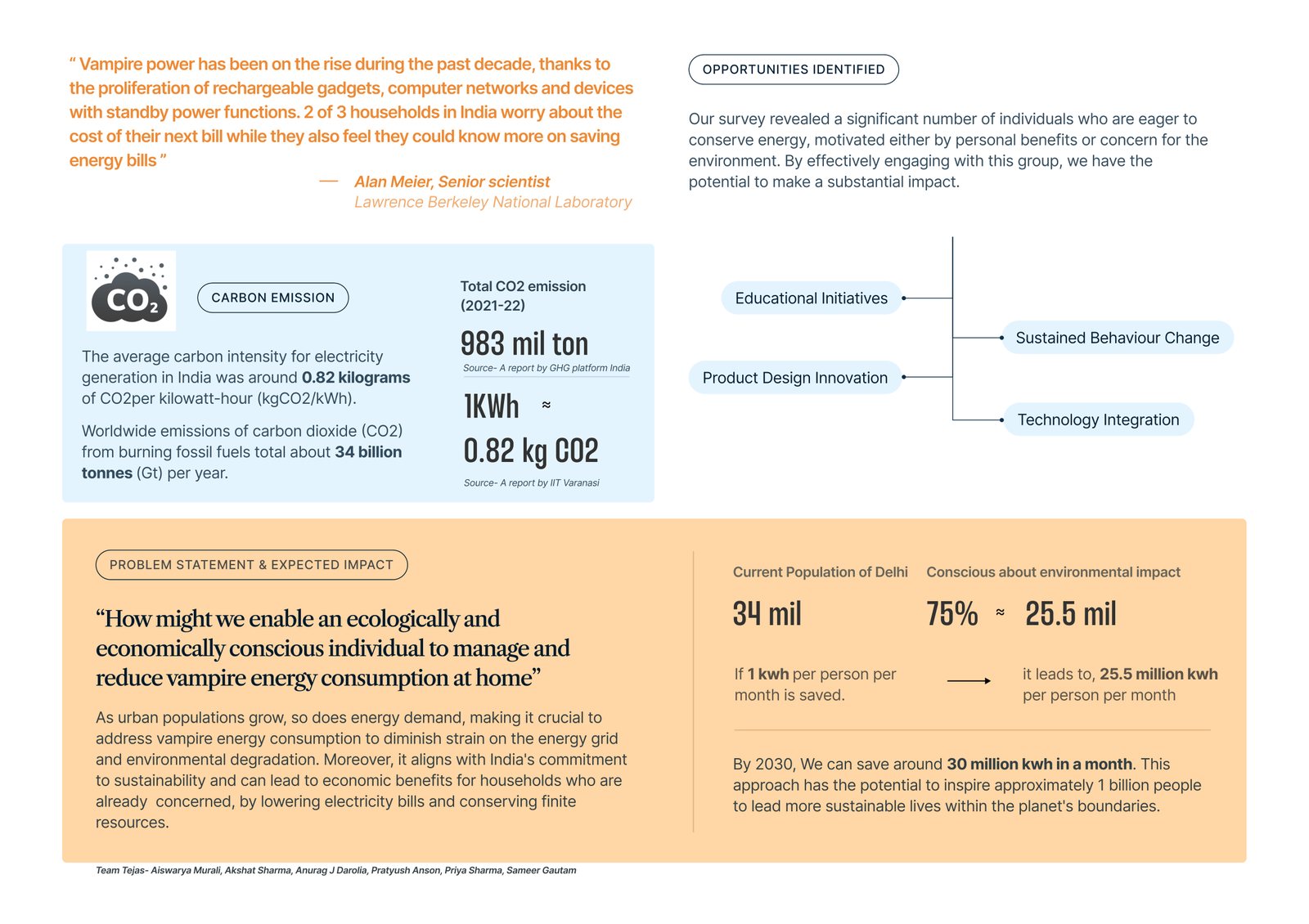
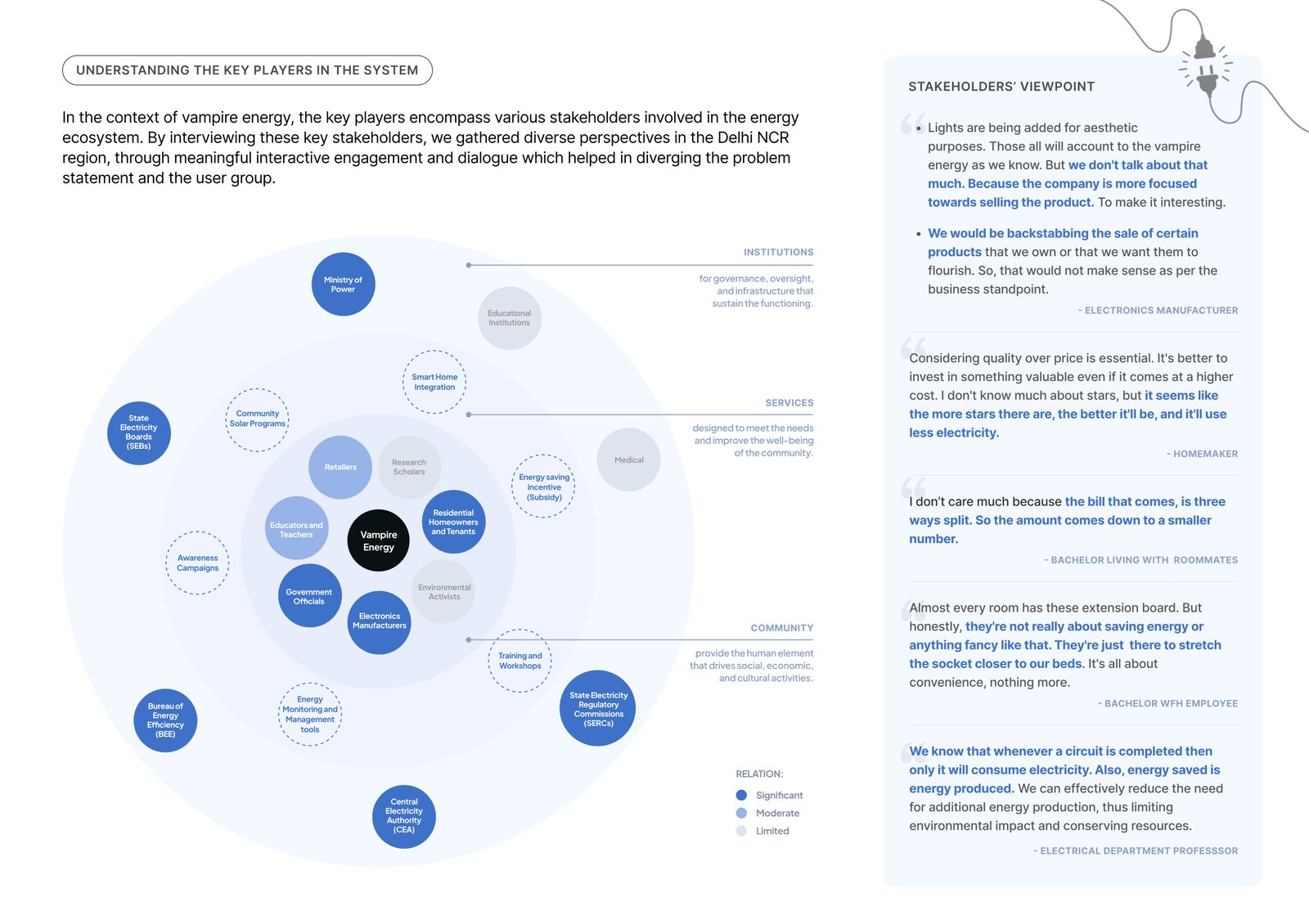
Vampire power is a hidden-consumption problem: nobody sees it, so nobody owns it. We framed the opportunity around urban Delhi households: how might we help ecologically and economically conscious people recognize, manage, and reduce vampire energy consumption at home?
02. What households knew, ignored, and never acted on
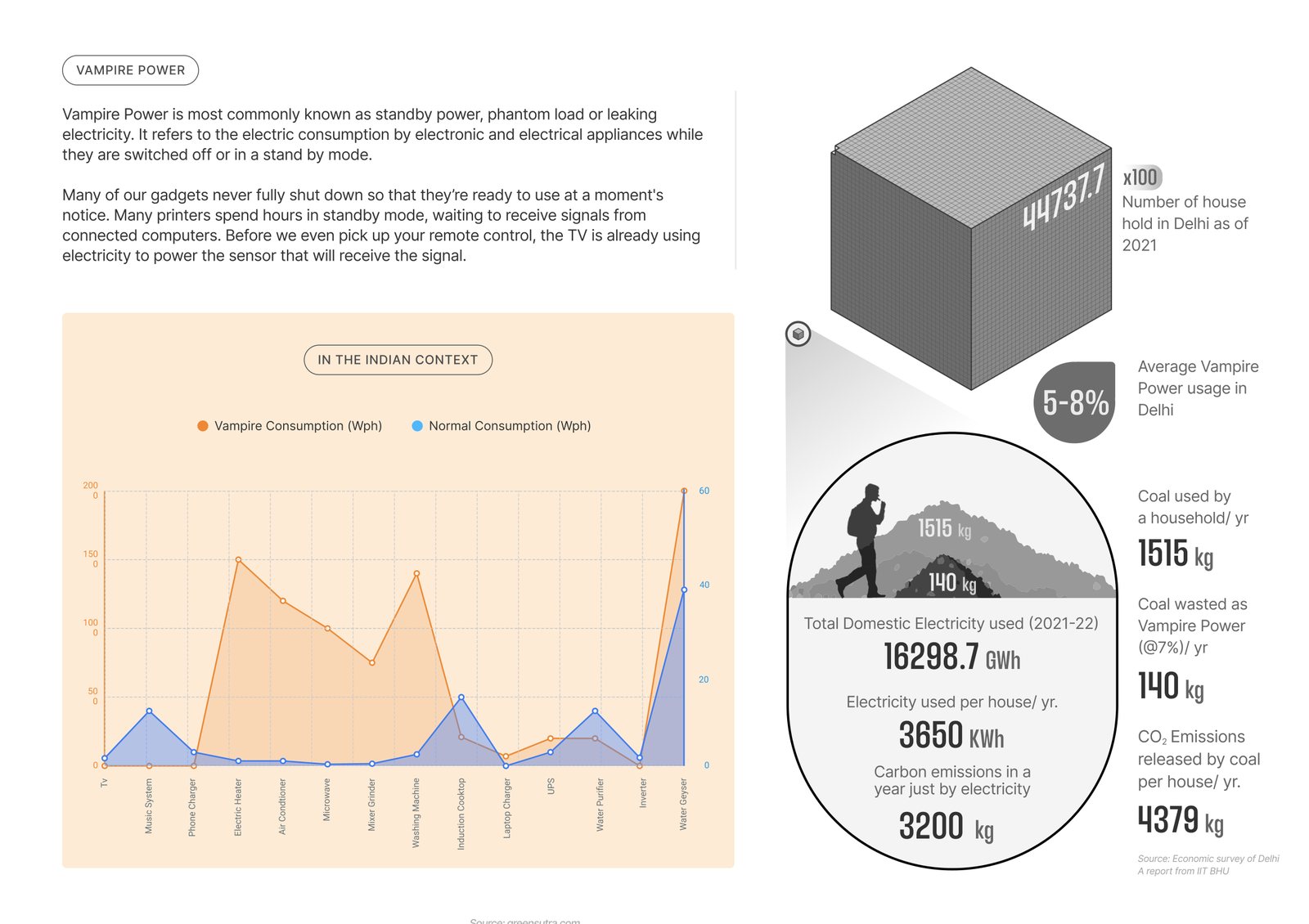
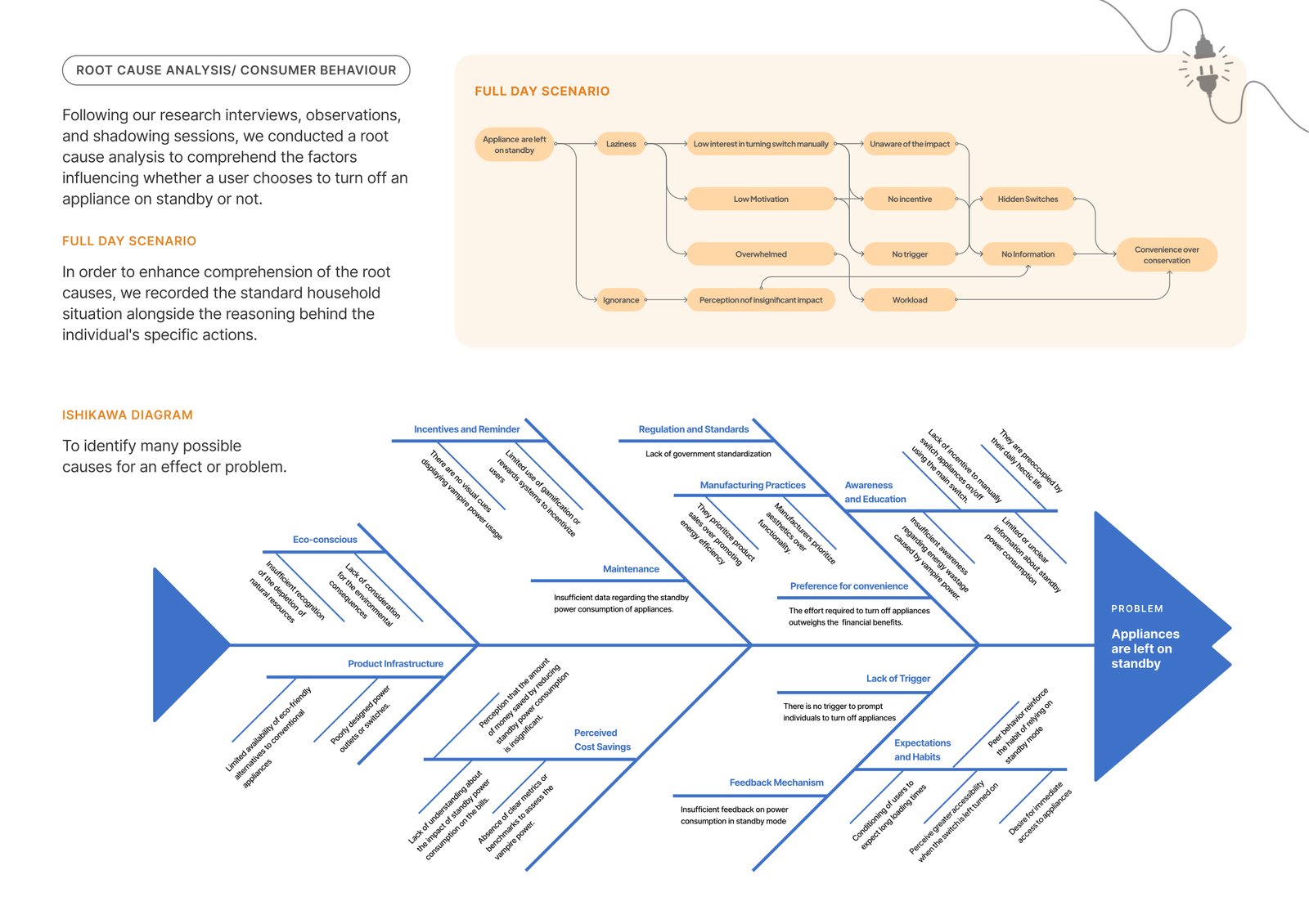
We researched the biggest vampire-power culprits and the policy landscape around standby consumption, then engaged households directly to understand the behaviors behind the waste: what people knew, what they ignored, and where the friction to acting actually sat.
03. Designing around the person, not the plug
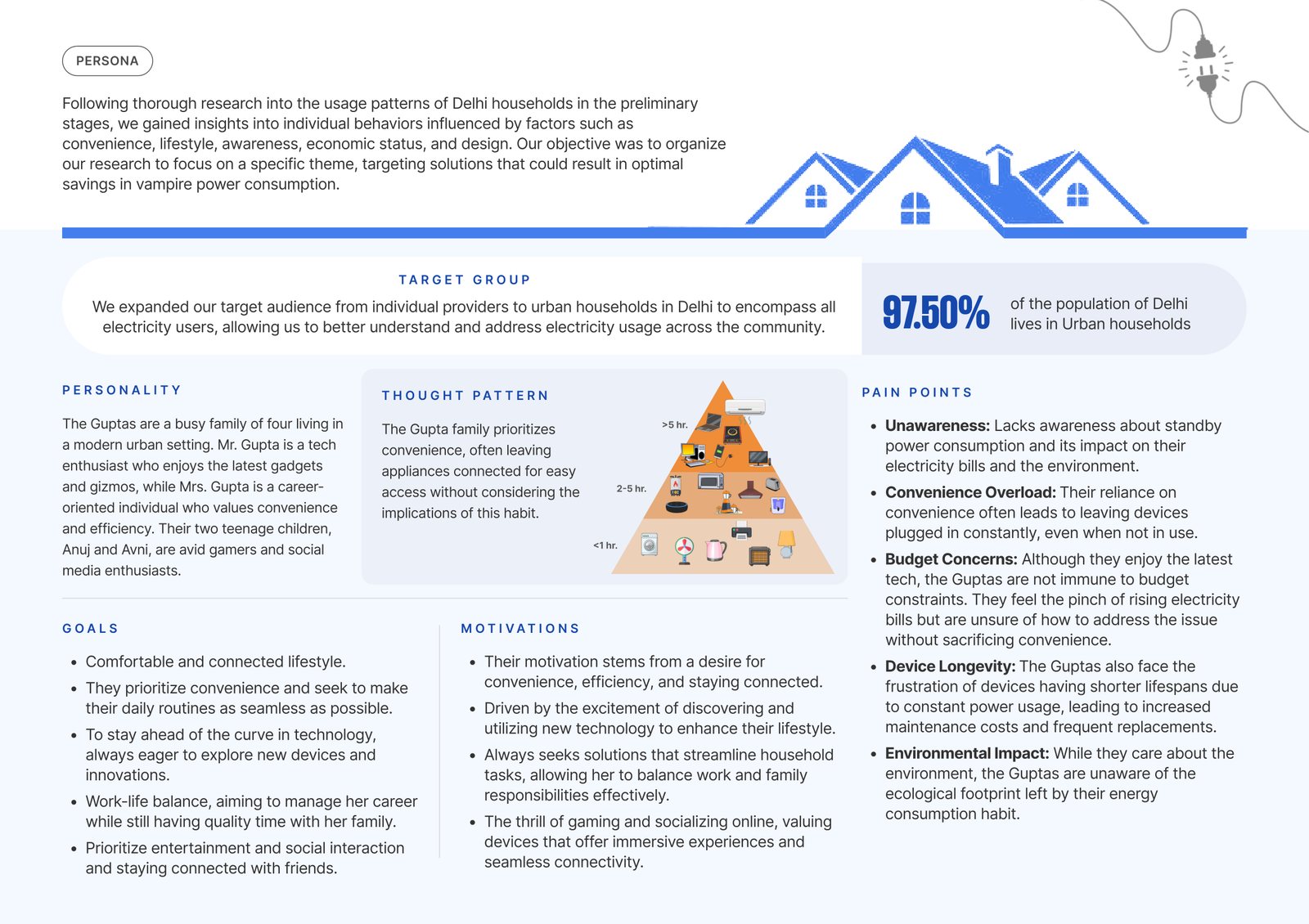
Personas and journey maps grounded the service in real motivations and pain points. The key shift: treating energy waste not as an information problem (“people don’t know”) but as a feedback problem (“people never see the meter move”).
04. From a concept to a service that could actually run
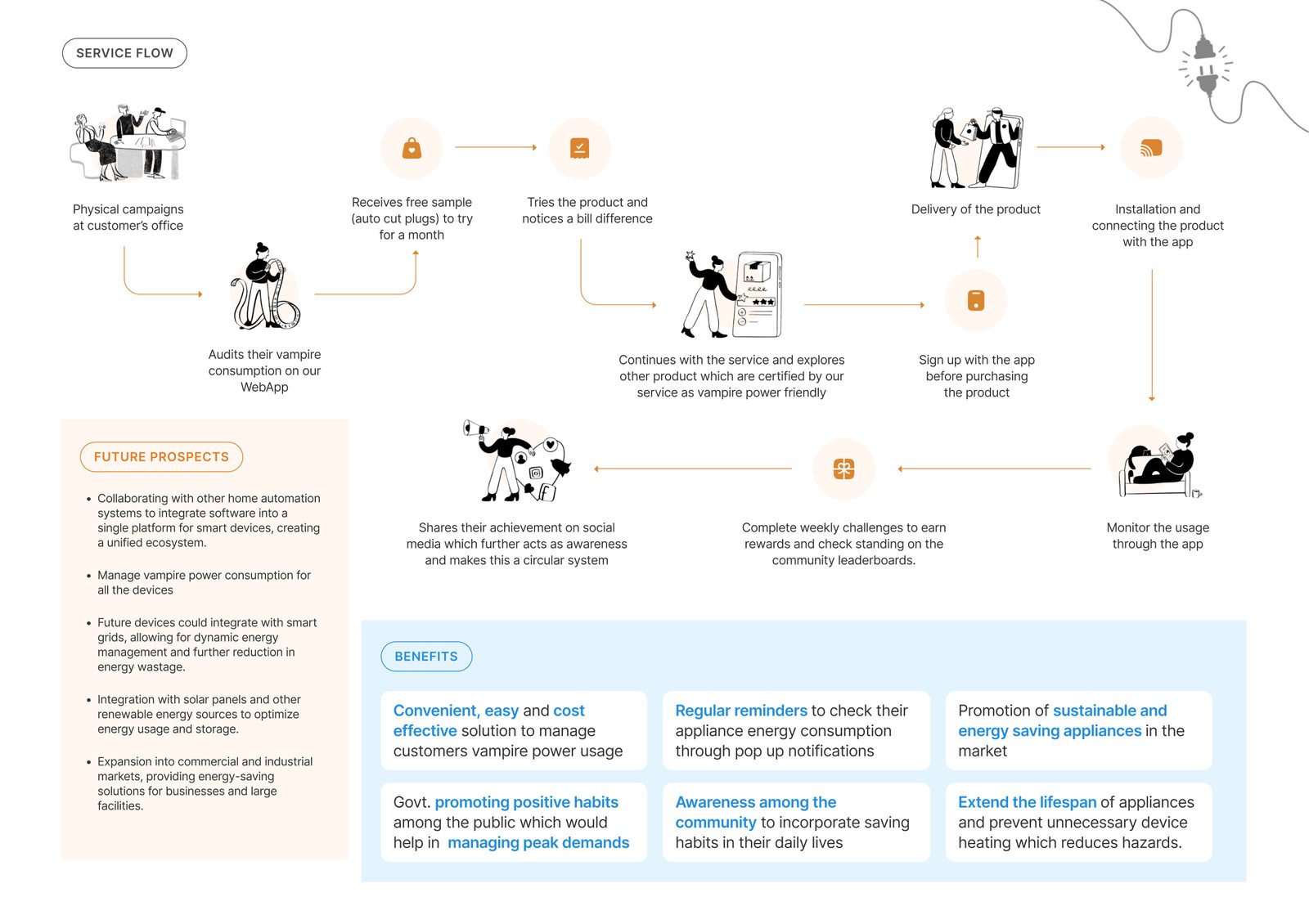
We refined the service through structured ideation, validated it with surveys and expert consultation, and mapped the full operation: frontstage interactions, backstage logistics, and the business model that makes it viable.
What the jury said
The jury appreciated the solution’s simplicity and practicality as a tool for promoting sustainable behavior, highlighting its potential environmental impact through accessible, implementable design.
What this project proves
Service design is at its best when it changes what people do, not just what they see. Plugg-out taught me to design feedback loops before interfaces, and to defend a service concept end-to-end, from household behavior to business model, in front of an international jury.